Ebook Free William Osler: A Life in Medicine
Spare time ends up being a really priceless time for lots of people. This is the time to lose all weary, exhausted, as well as bored jobs or obligations. Nevertheless, having also very long time will make you really feel bored. In addition, you will feel that so when you have no activities. To encounter the little trouble, we reveal a book William Osler: A Life In Medicine that can be a way to accompany you while remaining in the leisure time. It can be reviewing material, not as the pillow certainly.
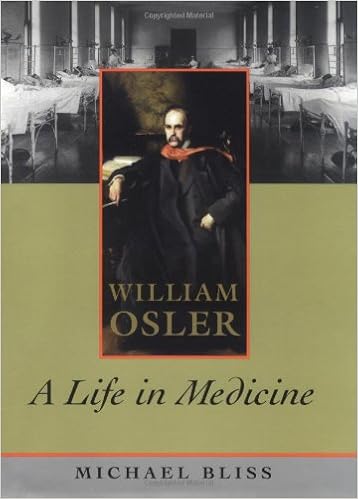
William Osler: A Life in Medicine

Ebook Free William Osler: A Life in Medicine
William Osler: A Life In Medicine. Welcome to the most effective website that offer hundreds kinds of book collections. Here, we will offer all publications William Osler: A Life In Medicine that you require. Guides from popular writers and publishers are offered. So, you can take pleasure in now to get one by one sort of publication William Osler: A Life In Medicine that you will certainly browse. Well, pertaining to guide that you really want, is this William Osler: A Life In Medicine your selection?
And also right here, that book is William Osler: A Life In Medicine, as you need it satisfying the subject of your difficulties. Life is obstacles, tasks, and also tasks are also difficulties, and also there are lots of points to be difficulties. When you are absolutely confused, just get this publication, and pick the vital details from guide. The material of this could be made complex and there are lots of themes, yet checking out based upon the topic or analysis web page by web page can assist you to understand simply that book.
This book will certainly be constantly most wanted since the subject to rise is incredibly popular. Besides, it features the subject for every age as well as problem. All degrees of individuals are welcomed effectively to read this book. The breakthrough of this publication is that you could not have to really feel tough to comprehend just what this publication deal. The lesson, understanding, experience, and all points that may offer will certainly need your life time to feel much better.
Obtain the link to download this William Osler: A Life In Medicine as well as begin downloading. You could really want the download soft documents of guide William Osler: A Life In Medicine by undergoing various other activities. And that's all done. Now, your turn to check out a publication is not always taking and lugging the book William Osler: A Life In Medicine all over you go. You could save the soft documents in your device that will never be away and also review it as you such as. It is like reviewing story tale from your device after that. Currently, start to enjoy reading William Osler: A Life In Medicine and also get your brand-new life!
From Library Journal
Medical historian Bliss (The Discovery of Insulin) has written the authoritative modern biography of 19th-century Canadian physician William Osler. Idolized by many as one of the greatest of all modern physicians, Osler emerges from this critical text as a brilliant, influential physician and teacher, full of compassion for his profession and patients. Bliss offers a glimpse of the rise of modern medicine and medical education as it unfolded around Osler and provides a view of the time as well as of the man. This volume replaces Harvey Cushing's two-volume tribute, The Life of Sir William Osler (1956), as the definitive text in the field. Highly recommended for history collections in all academic libraries and essential for medical collections.AEric D. Albright, Duke Medical Ctr. Lib., Durham, NC Copyright 1999 Reed Business Information, Inc.
Read more
From The New England Journal of Medicine
Since his death in 1919, William Osler has been the subject of intense biographical interest. Although Harvey Cushing's Pulitzer prize-winning Life of Sir William Osler (London: Oxford University Press, 1925), which is more than 1400 pages long, remains the definitive (if uncritical) biography, it belongs to a life-and-letters tradition of a more leisurely age than our own. Bliss's streamlined narrative of fewer than 600 pages is meant to introduce Osler to a generation for whom he is little more than a medical icon. Born in a rural community in Ontario, Canada, Osler attended the medical school at McGill University, which was relatively small at that time, and earned his medical degree in 1872. Following the fashion of the day, he traveled to Europe to study in London, Berlin, and Vienna; he was deeply impressed by German clinical medicine and laboratory research. On his return to Canada, he was appointed to a professorship at McGill. His growing reputation led to an appointment in clinical medicine at the University of Pennsylvania in 1884. When Johns Hopkins Hospital opened its doors in 1889, Osler was invited to become one of the six founding members of what was intended to be the country's leading medical school; the school was established four years later. His Principles and Practice of Medicine (New York: Appleton, 1892), which has been called the first great textbook of modern medicine, earned him an international reputation. Active on many fronts, Osler became the best-known physician in America. But he was overworked, and in 1904 he accepted the less-demanding Regius Professorship of Medicine at Oxford University, a largely honorary position that provided a base for his multifarious activities, which he carried on with unmatched vigor until his death. To write a biography of Osler 80 years after his death is a demanding task. A contemporary biographer might be expected to react to the long tradition of Oslerian hagiography by cutting his subject down to size. A number of present-day historians would welcome the opportunity to deconstruct this figure of the Victorian medical establishment in the interest of defrocking doctors and unmasking medicine as a political enterprise. Fortunately, Bliss eschews an agenda-laden approach. A respected medical historian best known for his biography of Sir Frederick Banting, the codiscoverer of insulin, Bliss poses new questions about such matters as sex, class, and race that would not have interested earlier generations of readers. Did Osler share the racial prejudices of his contemporaries? Was he patronizing in his attitude toward women? Did he make distinctions among his patients on the basis of their social standing? Are there skeletons (particularly sex scandals) in his closet? The answers that Bliss gives may surprise some readers. Osler displayed little of the patronizing attitudes toward blacks, women, and the poor manifested by many of his contemporaries. Nor can Bliss find evidence of scandal: persistent rumors of youthful indiscretions, when investigated, lacked substance. Bliss admits that he found almost nothing that would undercut Osler's enormous reputation. In an era when heroes of the past are often shown to have had feet of clay, it is refreshing to see a medical paragon such as Osler emerge from close scrutiny with his personal integrity not merely intact but enhanced. Bliss explores several themes that, although not new, illuminate Osler's outlook and intellectual development. The son of an Anglican minister, Osler abandoned his boyhood faith and espoused the Darwinian secular liberalism, with its unquestioned belief in progress, that gained popularity in the late 19th century. But his loss of religious faith left a void that was never quite filled. Unable to profess a belief in life after death, he compensated by finding meaning in work and by memorializing great physicians of the past, regarding memory and influence alone as bestowing immortality. As Osler turned away from Christianity, he found consolation in the writers of Greco-Roman antiquity, especially the Stoic philosophers. A humanist and genial skeptic, he laced his speeches, which were enormously popular in their day, with classical and biblical allusions that contemporary readers may find challenging. Bliss's biography can hardly be termed revisionist. Although he recounts the well-known features of Osler's life and career that have often been discussed elsewhere, his access to previously unused materials sheds light on a number of points. Perhaps the best chapter is the last: "Osler's Afterlife," in which Bliss traces Osler's reputation since his death. Adored in his lifetime, he was acclaimed after his death as his era's "most famous, most beloved, and most influential physician." His textbook was published in updated versions until 1947. Cushing memorialized his life in his great biography, numerous reminiscences were published, and Osler's essays continued to enjoy a wide readership. The Osler cult was assiduously cultivated by a number of his students and admirers, especially his nephew William W. Francis, who catalogued and guarded his library (and relics) at McGill. By the 1950s, memories of Osler had faded, but he became the subject of renewed interest in the 1960s, as a model of medical humanism in a world in which medicine was increasingly dominated by science and technology. Toward the end of the century, books and articles on Osler appeared regularly. If the Osler mystique has faded somewhat, his image possesses a remarkable longevity, and he continues to be one of the most quoted physicians of all time. Bliss's biography will of course be compared with that of Cushing. A few readers will miss the luxuriant detail that Bliss has omitted, but most readers will welcome a biography that is both more manageable in scope and more up to date in its assessment not merely of Osler but also of the bustling and creative medical world of the late 19th and early 20th centuries in which he practiced. For a generation of readers whose shared values are so different from Osler's, William Osler: A Life in Medicine is certain to generate a new appreciation of the man and his remarkably diverse achievements. Reviewed by Gary B. Ferngren, Ph.D. Copyright © 2000 Massachusetts Medical Society. All rights reserved. The New England Journal of Medicine is a registered trademark of the MMS.
Read more
See all Editorial Reviews
Product details
Hardcover: 632 pages
Publisher: Oxford University Press; 1 edition (November 18, 1999)
Language: English
ISBN-10: 0195123468
ISBN-13: 978-0195123463
Product Dimensions:
9.4 x 2.1 x 6.6 inches
Shipping Weight: 2.6 pounds
Average Customer Review:
4.8 out of 5 stars
25 customer reviews
Amazon Best Sellers Rank:
#545,843 in Books (See Top 100 in Books)
You may or may not have heard of William Osler. He did not discover anything of major importance in medicine and his name does not ring loud or clear in the 21st century. But for fifty years he was the image of what a “physician†should be in three countries – Canada, the United States and Britain. He was a leader in establishing Canadian medicine at McGill, a founder of Johns Hopkins Medical School and then Regius Professor of Medicine at Oxford, all after being raised in the Canadian backwoods in a preacher’s family. Michael Bliss says many times that the image of Osler seems too good to be true and he went out of his way to find negative points about him or hypocrisy about his image. Bliss says that literally nothing he could find, and the research in this book is enormous, showed Osler to be anything other than an open, honest, brilliant, empathetic physician whose personal life seemed to match his professional one. This is not a hagiography about Osler; it is just a biography of a good and highly intelligent human being who made an enormous impression on the history of Western medicine.In 504 pages of text I did not once find the writing dull, repetitive or clichéd. Bliss is a smooth and articulate writer who knows when and how to insert humor into the book, largely because Osler himself consistently inserted intelligent humor into his work. You genuinely get to know this man who insisted that science, not “tradition,†be the foundation of medicine and who combined that with a teaching style that was extraordinary. When he made rounds, students flocked to be with him. When he saw a patient, the patient always felt that he or she was the most important person in the world to Osler at that time, and he or she was. Bliss makes this biography a fluent and thoroughly enjoyable read. The reader not only comes to understand Osler but gets a clear and understandable overview of medicine in the late 19th and early 20th century.I had only marginally heard of Osler beforehand and only then because I had heard that Bliss was a great writer and one of his books was on this physician. When I saw how long this biography was, I seriously questioned whether I wanted to read a book of this length about someone who is not one of the “big names†in the 21st century public consciousness. But it was worth every minute. Smooth, fluent, well-organized and enjoyable writing about an extraordinary physician. This book has my highest recommendation.
This is one of the most absorbing and readable biographies of Sir William Osler. Michael Bliss' book is considerably shorter and easier to read than the monumental Pulitzer Prize winning book by Harvey Cushing, Life of Sir William Osler.As a retired general practitioner, Sir Willam's life and example is particularly close to what I have been practicing for the past forty years. When one reads this account one can begin to fathom this great man's ability, perception of human suffering, natural curiosity and dedication to the patient's welfare. This book reveals to us some of his other unique abilities and qualities namely his bibliophilia,vast reading, writing close to 170 papers, teaching scores of students, and having the honor of holding responsible and prestigious positions in the fields of medicine and the humanities. In addition to all these were his literally developing Johns Hopkins Hospital and University into the best in the world in his time and marshalled the achievements of hospitals in Philadelphia, Montreal and Toronto. As Regius Professor at Oxford from 1915 to 1919 he was a towering giant . He therefore stands in my eyes as the greatest doctor of the 19th.,20th. and perhaps the 21st. centuries. Not Sydenham, not Hunter, not even Lister could do all that Osler managed to do and do so with so much energy, dedication and humility.We doctors who were not with him on hospital rounds, clinical demonstrations,lectures, lunches, teas and dinners and amazing conversations with him are very envious of those who were blessed with these opportunities.He set a living example to his protege the way a doctor should live and work to earn that mark of nobility that the profession has had for centuries. He was the healer of all healers and inspired many to literally follow his foot steps. To mention two such would be too few but the likes of Harvey Cushing and Wilder Penfield come to mind and they both became superb neurosurgeons even though their hero, Osler , was an internist. I was astounded to read the great numbers of international luminaries who were treated by him. He ministered to doctors and their families, medical students and staff and was thus a doctor's doctor both as a teacher and physician.His love of little children, the youth, the aged and his own extended family was exemplary to say the least.How sad that such a doctor left the world at a mere 70 years of age. Three great nations, Canada, the U.S. and Britain all claim him as their own son. That honor and adulation no one and no doctor has the distinction of achieving. He served all of them so well.We all stand in awe of this stalwart of modern medicine and Michael Bliss has opened our eyes to this individual so well.
William Osler: A Life in Medicine PDF
William Osler: A Life in Medicine EPub
William Osler: A Life in Medicine Doc
William Osler: A Life in Medicine iBooks
William Osler: A Life in Medicine rtf
William Osler: A Life in Medicine Mobipocket
William Osler: A Life in Medicine Kindle

Tidak ada komentar :
Posting Komentar